

The Scrooge McDuck Theorem
why the richest duck in the world needed a vault to swim in

There’s a frame in the 1987 DuckTales intro that lives in my brain rent-free.
Scrooge McDuck, bathing suit and all, dives off a platform into an Olympic-sized pool of gold coins. Headfirst, that too, like it’s water.
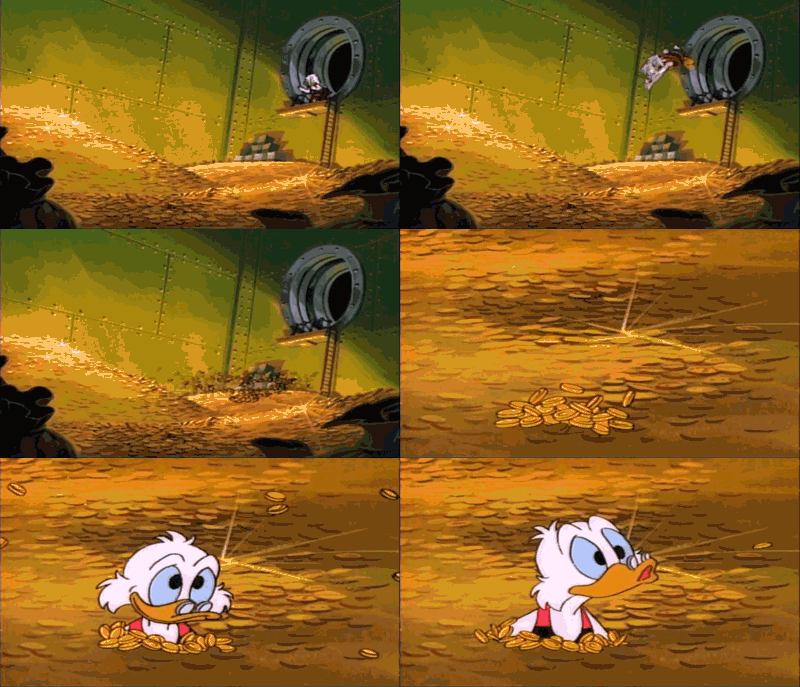
A 75-year-old waterfowl can backstroke through solid metal without shattering every bone in its frail cartoon body. Sure, wilful suspension of disbelief and whatnot, but this one really takes the cake.
I watched this on loop as a kid and convinced my naïve, impressionable 8-year-old, pre-brainrot brain,
…that right there’s the dream.
That’s what winning looks like. A room so full of money you can swim in it.
I wouldn’t say I come from nothing. I had a decently privileged upbringing, and barring a few short seasons of paucity around the Great Housing Crash of ‘08, we were comfortable for the most part.
Yet, something in my head ended up equating success with a caricaturish representation of wealth.
It took me embarrassingly long — maybe around the third time I stood in a line doing mental math on whether the $1.50 hot dog was “worth it” while wearing shoes that cost more than my college textbooks — to realize this.
Scrooge, eccentric as he may be, was not ecstatic while doing backflips in his pool of coins. He touched his treasure often, because it was the only thing that touched him anymore.
The richest duck in the world built a vault.
Then he lived inside the vault.
Then he became the vault.
A hostage to his own treasures, a rather insidious kind of Stockholm Syndrome followed suit.
And 8-year-old me was taking notes.
The math that eats you alive
What nobody tells you about being miserly, and I say this as a recovering practitioner of the art — it doesn't actually save you money.
Not in the way you think, at least. What it saves is a feeling — the brief, narcotic hit of watching a number not go down.
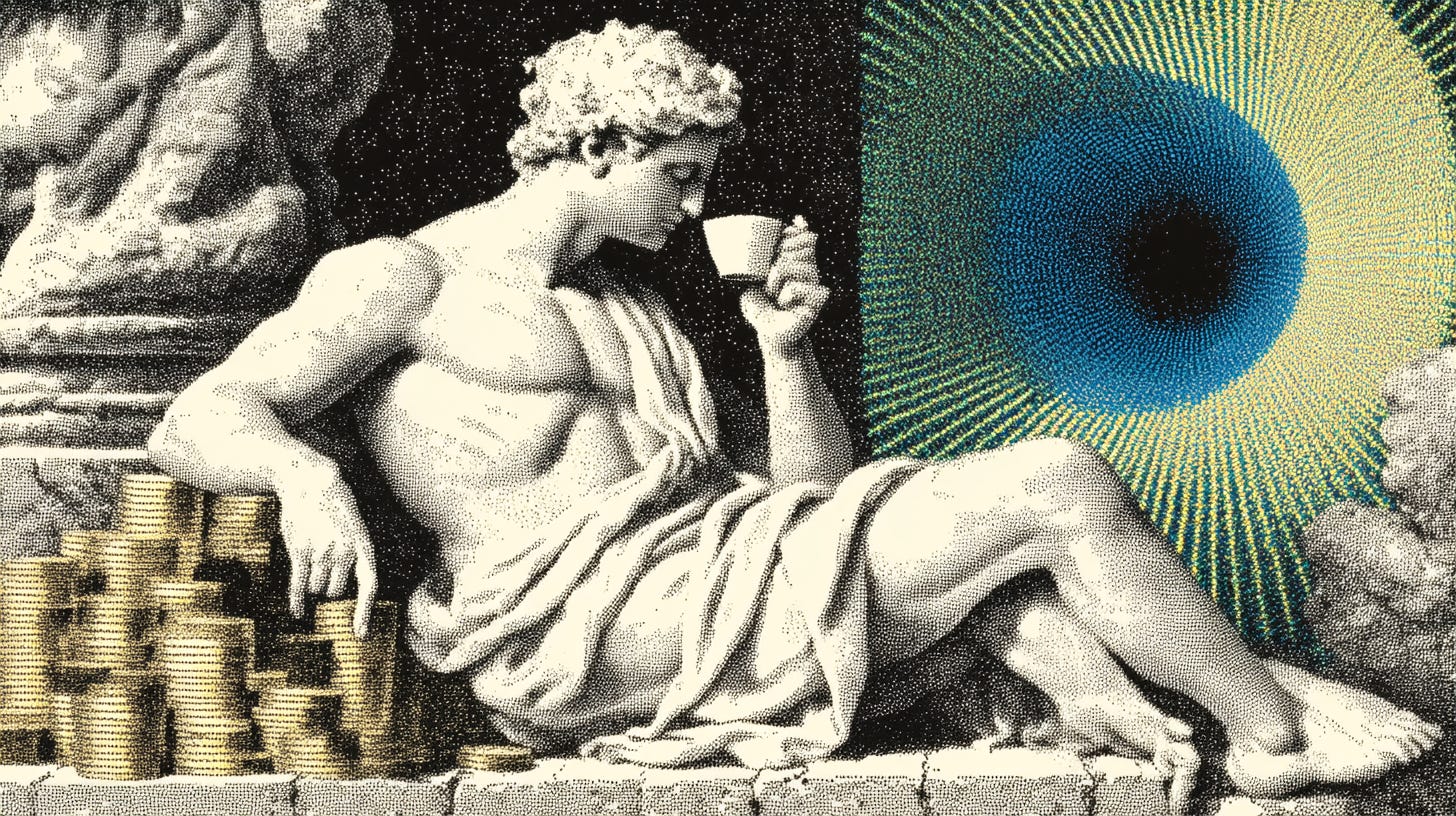
I used to refuse to turn on the AC. I'd sit in my broiler of an apartment, sweating like a pig, congratulating myself on the $40 I was "saving."
Forty dollars.
I'd spend days being miserable to save the equivalent of one mediocre dinner, and then — this is the part that should've tipped me off — I wouldn't even spend the saved money on the dinner.
The forty dollars wasn't for anything in particular, really. The dinner was never the point. The point was the non-spending.
This is the tell, and it was a tough poker face to crack for me. Miserliness disguises itself as frugality, but frugality has a goal.
Frugality says: I'll skip the daily latte so I can take the trip to Lisbon, then actually take the trip to Lisbon. Miserliness skips the latte, skips Lisbon, skips the AC, skips the friend's birthday dinner to avoid having to buy him a present, and then dies with a checking account full of money it was too hesitant to ever use.
A 2010 Princeton study (the Kahneman–Deaton one everybody half-remembers) found that emotional well-being rises with income up to a point and then mostly flatlines. People love to cite this with a cultish reverence as “money doesn’t buy happiness.”
The interesting part is the reverse finding hiding in the misery research: poverty makes you miserable, not because of a lack of things, but because every decision becomes a threat assessment.
Every dollar is a tiny emergency that probably never happens—the anticipation of a rainy day that you need to stash away for.
And the cosmic joke that slaps its punchline on you here, is that the miser recreates that exact psychology on purpose.
He has the money, but actively chooses to feel poor anyway, voluntarily raising his hand for the scarcity brain.
He picks up the burden and goes, “yes, this — this dread, please, I’d like to feel this debilitating anxious dread about a coffee. Oh, and could you please make this an everyday thing?”
What are you actually hoarding?
Seneca — Stoic, fabulously wealthy, ironically one of Rome’s biggest moneylenders, which we’ll politely set aside — wrote that “it is not the man who has too little, but the man who craves more, that is poor.”
Yes, it’s an ironic $10 bumper-sticker Stoic quote that the miserly Stoic ends up buying. Whatever.
But the deeper stoic point lurking underneath the sticker version is that the miser is hoarding security against a future that’s already arrived.
He’s saving for a rainy day that is, in fact, today, raining on him right now, but he refuses to open the umbrella because umbrellas cost money.
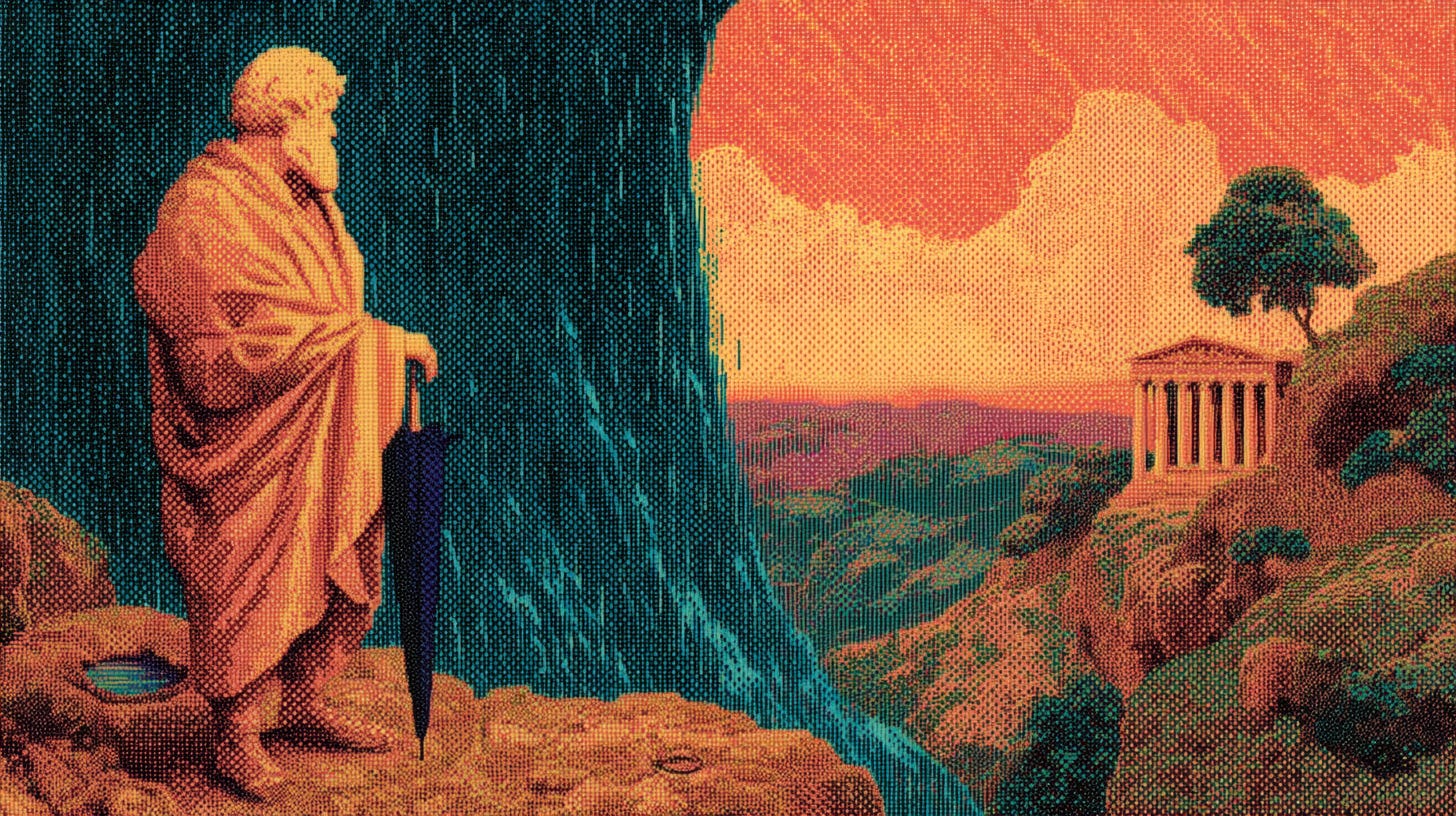
Think about what a miser is actually doing when he won’t spend.
The miser is trapped in a story of his own design: not yet. When I have more, then I’ll relax. Then I’ll enjoy it. Then I’ll be safe.
But “more” is a moving goalpost by design — it’s the one number that slips further beyond your grasp exactly as fast as you approach it.
Scrooge possessed three cubic acres of gold. And was he chill about it? Absolutely not.
He was famously, cartoonishly paranoid about losing a single dime, which is why the show’s entire premise is him fighting off the Beagle Boys every week.
The heavy door of his vault perfectly symbolised the weight of the grasp his riches had on him. It was supposed to free him, but it gave him something to defend rabidly until the day he died.
His hoard ended up owning him.
<insert a Tyler Durden quote of your choice here>
The shift that ruined my savings account (in a good way)
A few years ago, a friend recommended a book with a title that sounded like financial malpractice: Die with Zero.
At the time, I assumed it was one of those personal finance books written by someone who owns seventeen rental properties and thinks avocado toast is the reason millennials can’t buy houses.
I couldn’t have been more wrong, because it turned out to be one of the most unsettling books I’ve ever read.
Perkins makes a deceptively simple argument: money is only valuable when it can be converted into meaningful experiences. Every dollar sitting untouched is a claim on a future version of yourself. The mistake we end up making is equating more money in the bank to more spending potential in the future.
Future-you isn’t guaranteed to exist, and even if he does, he won’t be the same person. A backpacking trip at thirty is not the same experience at seventy. Neither are long hikes, spontaneous road trips, learning to surf, or staying out until 2am talking about life with people you’ll never see again.
Experiences come with expiration dates, but you know what doesn’t?
Money.
That idea whacked me harder than any investing advice ever has.
I realized I’d been treating my bank account like a high score. The number itself had become the objective. Not freedom, experiences or relationships.
Just a primal, ungabunga urge to see... number go up.
Perkins calls this the trap of dying with too much money. We spend decades sacrificing time, energy, and opportunities accumulating resources we never actually cash in. All that unspent money represents the amount of life energy we exchanged for it.
All for nothing.
Once I read this and chewed on it for a while, I realised we had it backwards this entire time.
Why are we terrified of running out of money when the more haunting alternative is running out of life first?
Not years, life itself.
The book forced me to ask, if my account balance doubled tomorrow, what exactly would change? What would I finally allow myself to do?
The scary answer was…not much. The amount was never the problem, when I’d been training myself to postpone living.
A life spent endlessly preparing for life is still a life spent waiting.
It’s easy to misunderstand Perkins — a high-stakes poker aficionado who also manages hedge funds — as advocating recklessness. But he’s simply advocating front-loading your life to get the most out of your money, and more importantly, your years.
He argues that net worth maxxing is a futile pursuit. On the other hand, fulfillmentmaxxing, experiencemaxxing, memoriesmaxxing, and time spent doing things that matter while you’re still physically capable of enjoying them will add life and meaning to your years.
Or, put another way:
The purpose of money is to turn it into moments you’ll still be grateful for when the receipts are long gone, not to die with a massive net worth as a solemn mausoleum of all the unlived possibilities you could have gotten out of it.
The book made me spend more deliberately because once I saw that distinction, I couldn’t unsee it.
Spreadsheet vs. life
I don’t think the answer is to start spending money like a crazed lottery winner who just discovered jet skis exist. Perhaps the answer is a lot less dramatic.
I’ve started asking myself a different question whenever I get weirdly stingy about something.
“What exactly am I protecting here?”
Sometimes the answer is sensible. Maybe rent. Or an emergency fund, or not having to eat instant noodles at eighty.
But surprisingly often, it is nothing but not facing the discomfort of watching the number go down. The attachment of that number to your ego and your sense of self-worth is what holds you back from spending on something that would genuinely increase the quality of your life.
A while ago, I almost talked myself out of flying home for a family event because the tickets felt expensive. I spent twenty minutes staring at the flight prices like it was the trolley problem.
Then I had this ridiculous realization:
There is absolutely no version of me at ninety years old thinking, “Thank God I missed that memory. The savings account really needed those $200.”
That’s the thing about money. A spreadsheet and a life keep score differently, because one is centred around accumulation, and the other around participation.
And the older I get, the more suspicious I become of purchases that save money at the expense of people.
Skipping dinner with a cherished friend to save twenty bucks, missing the wedding of your cousin because the dress code said pastel suits and you’d have to buy one, postponing the trip to Lisbon and seeing Instagram stories of your group going and having the time of their lives.
Saying “maybe next year” for the fifth year in a row.
Those decisions feel responsible in the moment, and yes, sometimes they are. But sometimes they’re just fear, feigning sensibility.
One idea I stole from Die With Zero is that experiences have expiration dates.
You can take your first backpacking trip at twenty-five. See, you can technically take your first backpacking trip at seventy-five too, given your back still loves you back.
But let’s not pretend those are the same experiences.
Some opportunities are age-dependent, some memories season-dependent. Some things only make sense during a particular chapter of your life.
Another cruel cosmic joke is that you usually don’t realize the chapter has ended until you’re already on the next page.
I’ve also become a big believer in spending money on people before things. I barely remember most of the stuff I’ve bought, but I remember conversations.
Road trips. Late-night meals. Concerts from artists I’ve always wanted to see perform live. The random Tuesdays that turned into stories I’ve repeated over 20 times.
Those seem to appreciate in value while everything else depreciates.
Every so often, it may be worth spending money on something that serves no grand purpose. Unwise as it may be, it serves as a worthy reminder that you are alive. That your money works for you and not the other way around.
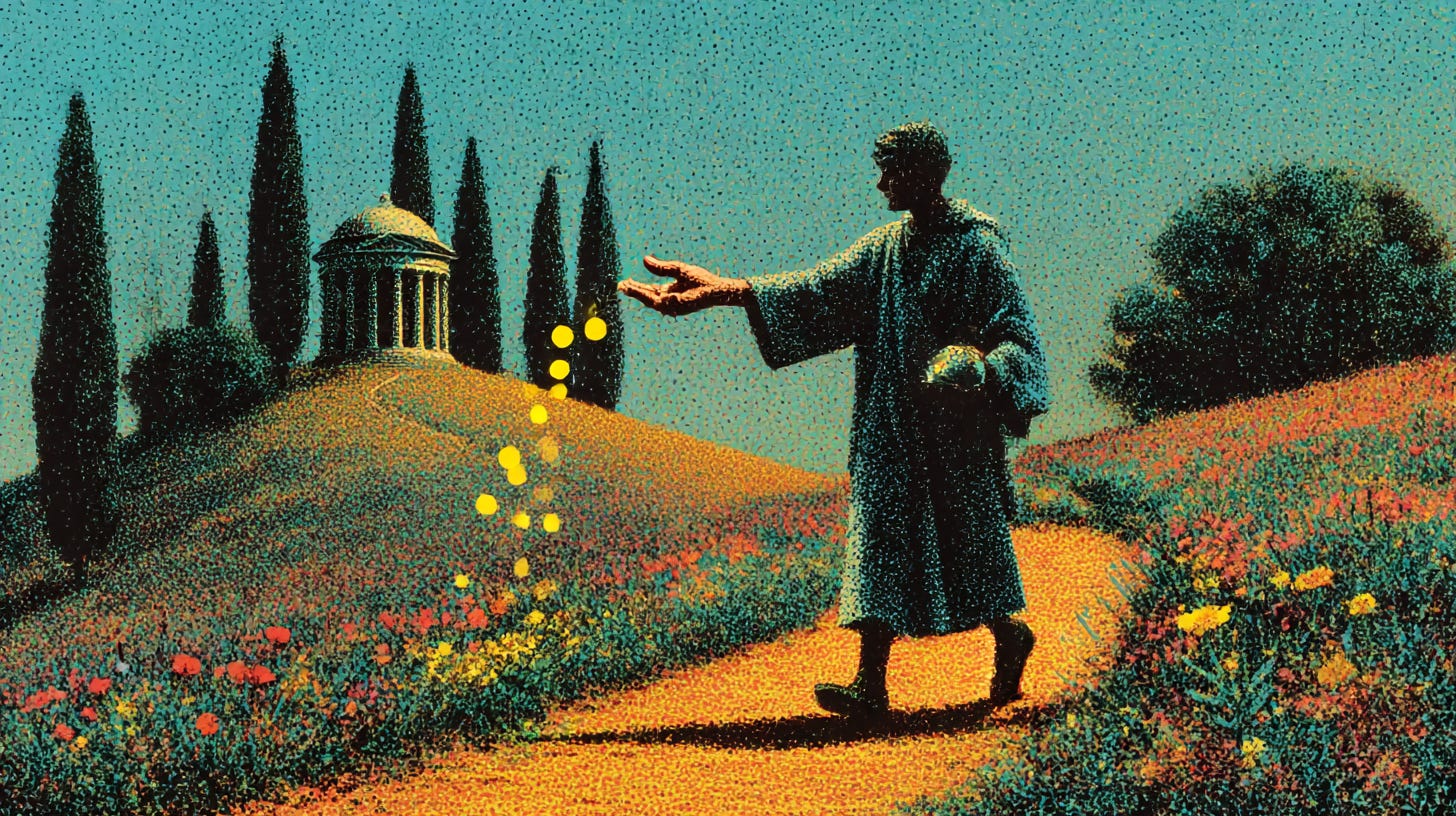
The strange thing about money is that we spend our lives treating it like a shield against uncertainty, as though one more digit might finally negotiate a truce with the future. But the future never signs the agreement.
It keeps arriving anyway.
The coffee grows cold as the seasons change. Friends move away, bodies age as the joints begin to creak. The afternoon you were saving for quietly becomes yesterday.
So buy the damn coffee. Take the flight. Stay for dessert. Sit in the cool room, and watch the number shrink a little.
Then watch the world continue its indifferent orbit around the sun. Nothing collapses.
The walls remain standing, as the sky offers no protest. And for a brief moment, you remember something the miser never learns.
Money sitting still is only possibility. A life well-lived is possibility converted into memories.
That’s the currency of life.
Still reading?
I got you covered. You’re gonna love these older picks from the archives.
The cracks of gold that could save your relationship

Osaka, 11 PM, light rain, and I’m standing on a street corner near Shinsekai crying into a takoyaki ball.
A voicemail from your failures

In 1914, a roaring fire ripped through a laboratory complex in West Orange, New Jersey.
Why your friendships crumble in adulthood

Two months ago, as I was navigating through the constant, rapid-fire onslaught of thoughts and reveries that cross my mind, a fleeting thought about a childhood friend of mine suddenly appeared out of nowhere.
Seeing number go down is a very difficult psychology to overcome. I'm personally dealing with the prospects of that, as are a few others close to me. I loved the insights behind Die With Zero and do my best to follow Ramit Sethi's adjacent concept of living your Rich Life, but the struggle isn't necessarily the number itself, but the idea of trading optionality for a definitive exchange. The technique that works best for me is Bezos's Regret Minimization, or asking my theoretical 80-year-old self what I'd regret most not doing. That usually gets me closer to a lifestyle optimal decision. On the scale of most people's financial situation, having optionality in the first place is a huge luxury, but opens up a host of new psychological traps.
"That’s what winning looks like. A room so full of money you can swim in it."
LOL ... I'm sorry. If that's winning to you, life must suck. Then that must mean all poor people are losers?
Does the superiority complex hurt? Just curious.